Table of Contents
ToggleA clean home doesn’t happen by accident, it happens by strategy. Most homeowners spend hours cleaning every week but feel like they’re spinning their wheels, tackling the same mess in different rooms without seeing real progress. The truth is that effective house cleaning tips aren’t about working harder: they’re about working smarter. By combining a structured room-by-room plan with the right tools and honest priorities, you can cut your cleaning time in half while actually keeping your home in better shape year-round. This guide walks through the practical cleaning strategies that deliver real results.
Key Takeaways
- A room-by-room cleaning plan with assigned days prevents wasted effort and creates momentum by eliminating decision fatigue.
- Essential tools like microfiber cloths, a quality vacuum, and budget-friendly supplies like baking soda and vinegar eliminate the need for expensive specialty products.
- Prioritizing high-impact areas such as the kitchen and bathrooms first delivers visible results in 40–60 minutes and makes your entire home feel cleaner.
- A sustainable 10-minute daily reset that clears counters and addresses spills prevents buildup and keeps your home clean without intensive weekly deep cleans.
- Working from top to bottom within each room and letting cleaning solutions sit before scrubbing multiplies effectiveness without requiring extra effort.
Start With a Strategic Room-by-Room Plan
The biggest mistake homeowners make is cleaning without a system. They bounce from the kitchen to the bedroom to the bathroom, cleaning whatever feels urgent, which creates overlap and wasted motion. A room-by-room plan prevents that chaos.
Start by mapping out your home’s zones. Typically, that’s bedrooms, bathrooms, kitchen, living areas, and hallways. Assign each zone a day or time slot during your weekly cleaning cycle. For instance, clean bathrooms on Monday, kitchen on Tuesday, and bedrooms on Wednesday. This prevents the scattered approach that leaves half-finished tasks everywhere.
Within each room, work from top to bottom and left to right. Dust falls down, so tackle shelves and ceiling corners first, then wipe down surfaces, and finish with floors. This prevents you from cleaning the floor twice. Group similar tasks by room: all dusting in one pass, all wiping in another, all vacuuming last.
Write your plan down or use a simple checklist on your phone. Knowing exactly what gets cleaned on which day removes decision fatigue and builds momentum. You’re not deciding what to do next, you’re just executing the plan.
Master the Essential Cleaning Tools and Supplies
You don’t need a closet full of specialty bottles to clean effectively. The core arsenal is surprisingly small: a microfiber cloth, a stiff-bristled brush, a vacuum with upholstery attachments, a mop, and all-purpose spray cleaner. These handle 90% of household cleaning tasks.
Microfiber cloths outperform cotton rags because their fibers trap dust and bacteria without leaving residue. One cloth can wipe down a bedroom in minutes. A stiff brush tackles grout, baseboards, and corners where dust accumulates. A quality vacuum, even a budget model with crevice and brush attachments, clears floors and upholstery far faster than handheld models alone.
For supplies, baking soda and white vinegar are your workhorses. Baking soda absorbs odors and acts as a gentle abrasive for scrubbing without scratching surfaces. Vinegar cuts grease and mineral deposits. Mix them (separately, together they fizz and lose effectiveness) to tackle stubborn buildup. Dish soap works for general surface cleaning, and a dedicated bathroom cleaner handles soap scum and mold faster than DIY solutions in wet environments.
Budget-Friendly Alternatives to Premium Products
You don’t need boutique cleaning products to get a spotless home. Baking soda costs pennies per box and replaces expensive scrubbing powders. White vinegar, typically under $2 a bottle, substitutes for most glass and surface cleaners. Castile soap (a concentrated plant-based cleaner) dilutes with water to handle floors, counters, and even laundry at a fraction of branded product costs.
For stubborn grime, the combination of dish soap, vinegar, and baking soda works as well as premium degreasers. The key is letting these solutions sit for 10–15 minutes before scrubbing, rather than expecting instant results from high-priced alternatives. Old toothbrushes and worn-out socks become brushes and microfiber replacements. Newspapers and coffee filters clean windows as effectively as paper towels.
Deep Clean High-Impact Areas First
High-traffic zones, kitchen, bathrooms, entry hallways, deteriorate fastest and are most visible to guests. Prioritizing these areas first means your home always looks cleaner with less overall effort. The kitchen accumulates grease, crumbs, and spills daily: bathrooms develop soap scum, mold, and mineral deposits on tile and fixtures.
Start your weekly cleaning with these spaces. A deep-cleaned kitchen and bathroom set the tone for the entire home and take about an hour combined if you’ve got your tools and plan ready. Less-used spaces like guest bedrooms or formal living rooms need less frequent heavy work. Dusting and vacuuming suffice for most weeks: deep work happens quarterly.
This priority system also creates visible wins early in your cleaning day. Seeing the kitchen gleam after 20 minutes builds momentum to finish the rest of the home. It’s psychology as much as logistics.
Kitchen and Bathroom Priorities
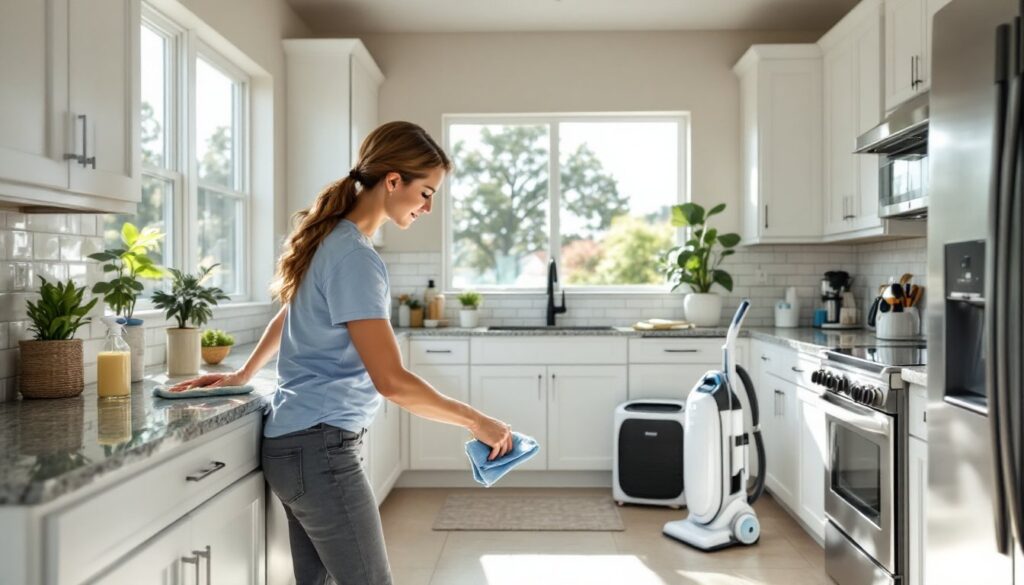
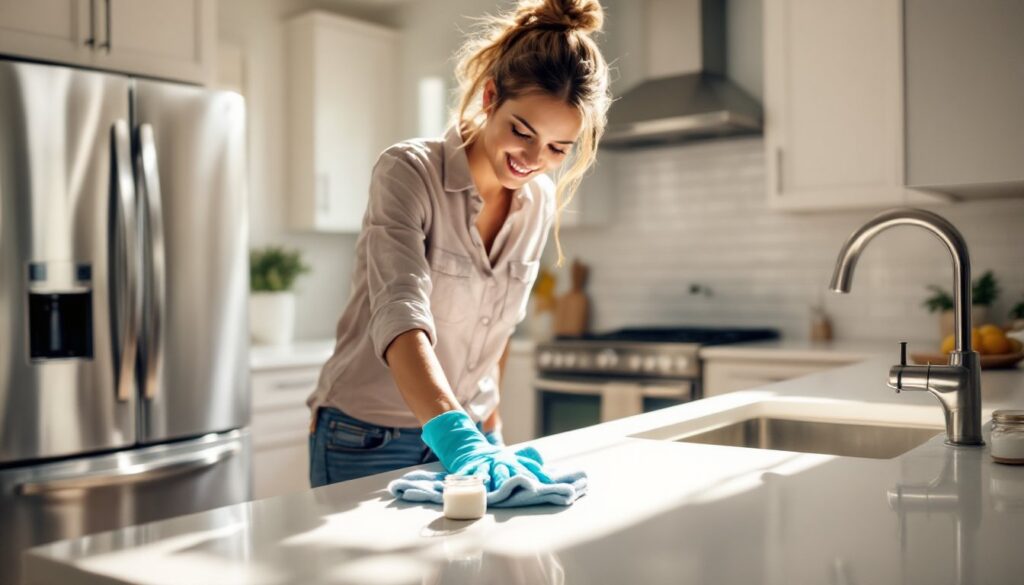
Kitchen cleaning starts with clearing counters and the sink. Wash dishes or load the dishwasher first, you can’t clean around clutter. Wipe counters with all-purpose spray and a microfiber cloth, paying attention to crumbs along the backsplash and corners. Degrease the stovetop with vinegar and baking soda paste: let it sit 10 minutes before wiping. Wipe cabinet fronts (these accumulate cooking splatter). Sweep, then mop, working from the farthest corner toward the exit.
Bathroom cleaning follows a similar top-to-bottom sequence. Clear counters around the sink. Spray shower walls and tub with bathroom cleaner and let it sit while you handle other tasks. Scrub the toilet bowl with a stiff brush, then the exterior with disinfectant spray and cloth. Wipe the sink and counters. Scrub the shower and tub. Finish with mirrors and floors. The wait time while cleaner sits on tile means you’re multitasking, not standing around.
These high-impact rooms typically take 20–30 minutes each when you’ve got your supplies and process down. That’s 40–60 minutes for the spaces that define whether your home looks clean to anyone who visits.
Build Sustainable Cleaning Habits
One deep clean every few months followed by neglect creates a cycle of drudgery. Sustainable cleaning comes from small, consistent habits that prevent buildup.
The single most effective habit is a 10-minute daily reset. Each evening, spend 10 minutes clearing kitchen counters, rinsing the sink, wiping down the dining table, and putting items back where they belong. This removes the clutter that makes spaces feel dirty and prevents dishes and debris from piling up. A home that’s tidied daily looks cleaner even if it’s not deep-cleaned as frequently.
Second, clean spills immediately. Kitchen splatter, bathroom water spots, and dust tracked onto hallway floors take seconds to wipe up when fresh but become stubborn stains later. Keep your microfiber cloth and spray bottle within arm’s reach of common problem areas.
Third, assign specific cleaning tasks to specific times, not moods. “I’ll clean on Saturday” works better than “I’ll clean when I feel like it.” A committed time slot removes the mental burden of deciding and ensures cleaning actually happens. Resources like Real Simple offer additional decluttering and organization strategies that reinforce these habits.
Finally, involve household members. A rotating chore chart for kids or roommates distributes the load and builds accountability. Even a partner taking responsibility for one high-impact area (say, bathrooms or kitchen) cuts your personal load by 25%.
These habits don’t feel like work once they’re embedded. They prevent the panicked 3-hour deep clean before guests arrive because your home stays reasonably clean all the time. Consistency beats intensity every time.
Conclusion
Effective house cleaning tips aren’t complicated, they’re about planning, prioritizing, and staying consistent. A strategic room-by-room approach combined with essential tools and focused effort on high-impact areas transforms cleaning from a dreaded chore into a manageable routine. Add daily habits like the 10-minute reset and immediate spill cleanup, and you’ve built a system that keeps your home clean without endless hours of scrubbing. The goal isn’t perfection: it’s a home that feels clean, functions well, and doesn’t demand constant firefighting.