Table of Contents
ToggleQueen Creek homeowners face unique cleaning challenges, desert dust, intense Arizona sun, and low humidity that dries out surfaces differently than other climates. Whether you’re managing a single-story ranch or a multi-level home, having a solid cleaning strategy keeps your house healthier, your air cleaner, and your space more inviting. This guide walks you through the essentials: the tools you need, room-by-room priorities, and sustainable routines that stick. You’ll learn how to tackle desert-specific issues and reclaim time with practical hacks that don’t sacrifice results.
Key Takeaways
- A strategic house cleaning routine tailored to Queen Creek’s desert environment—featuring dust control and preventive maintenance—saves time and protects your home investment more effectively than reactive cleaning.
- Prioritize weekly deep cleans for high-contamination zones like kitchens and bathrooms, while adjusting frequency for bedrooms and living areas based on actual use and traffic patterns.
- Essential tools for Queen Creek homes include a HEPA-filter vacuum, microfiber cloths, a squeegee, and MERV-13 furnace filters changed every 30-45 days to manage fine desert dust accumulation.
- Damp-wiping surfaces with barely-dampened microfiber cloths instead of dry-dusting prevents dust resettlement and is more effective in Arizona’s low-humidity climate.
- Building a sustainable cleaning routine starts minimal with daily tidying and weekly deep cleans, then gradually adds biweekly and monthly tasks only after habits stick to prevent burnout.
- Use white vinegar solutions weekly on glass and chrome to prevent mineral deposits from Queen Creek’s moderately hard water before they require abrasive cleaners.
Why Queen Creek Homeowners Need A Cleaning Strategy
Cleaning without a strategy feels endless, you’re constantly reacting instead of preventing. Arizona’s low humidity and dust-heavy environment means Queen Creek homes accumulate grit faster than homes in wetter climates. A deliberate approach saves time, protects your investment, and makes the actual work less overwhelming.
The key is understanding that cleaning isn’t one task, it’s a system. High-traffic areas need weekly attention. Bedrooms and living rooms need less frequent deep cleaning. Bathrooms and kitchens demand regular sanitizing because they’re moisture-prone and prone to mildew. When you prioritize by room function and family habits, you work smarter. You also catch small problems, a water spot on tile, dust accumulation near a vent, or a grimy range hood, before they require professional help.
Queen Creek’s intense outdoor environment means tracking sand, pollen, and dust indoors is unavoidable. Rather than fighting it, design your cleaning routine around containment and prevention. Entry mats, closed-door systems, and targeted daily tidying reduce the scope of weekly deep cleans. This mental shift alone, from “everything needs cleaning” to “here’s where to focus first”, makes homeowners feel more in control.
Essential Cleaning Tools Every Queen Creek Home Needs
You don’t need a closet full of gadgets, but having the right basics prevents wasted effort and frustration.
Core Tools:
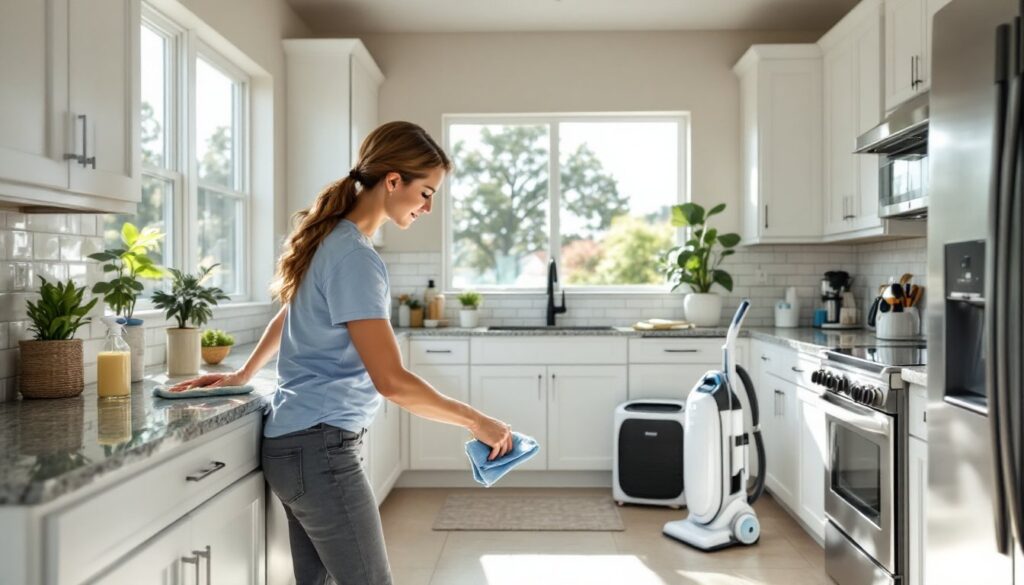
• Microfiber cloths (reusable, lint-free for glass and dusting)
• Vacuum with HEPA filter (captures fine desert dust and allergens)
• Mop and bucket or mop system (hard floors dominate Queen Creek homes: tile mops reduce water waste)
• Toilet brush and plunger (basics you shouldn’t skimp on)
• Squeegee (critical for shower doors and windows, Arizona sun shows every streak)
• Soft-bristle scrub brush and grout brush (for tile, without damaging grout)
• Duster with extendable handle (ceiling fans and high vents trap dust fast in the desert)
• Heavy-duty vacuum bags or container (Arizona dust is fine: you’ll empty frequently)
For deep cleans, add a low-pile carpet cleaner if you have any carpet, desert humidity is low, so water dries quickly and mold risk is minimal, but dust embeds deep. A handheld steam cleaner works for grout, baseboards, and tight corners without chemicals, which many Queen Creek families prefer.
Brand choice matters less than function. Look for vacuums rated for fine dust and hard-floor cleaning. Microfiber cloths from any source work: buy multipacks and rotate them. Avoid single-use disposables: they’re wasteful and expensive over time.
Room-By-Room Cleaning Priorities For Arizona Homes
Not all rooms need equal attention every week. Prioritize based on use, exposure, and contamination risk.
Kitchens & Bathrooms (Weekly Deep Clean)
These are contamination zones. Kitchens accumulate grease, food particles, and bacteria, especially around the range and sink. Bathrooms develop mold risk (even low-humidity Arizona can have moisture issues near showers and under sinks). Wipe counters daily, clean the range hood filter monthly, and disinfect high-touch surfaces (faucet handles, light switches) twice weekly. For bathroom tile, a weekly scrub prevents soap scum and mildew buildup. Focus on grout lines, which trap dust and moisture.
Bedrooms & Living Areas (Biweekly or As-Needed)
Dust settles here, but contamination risk is lower. Dust horizontal surfaces, vacuum under furniture (where dust bunnies breed), and change bedding weekly. In dry Arizona air, dust doesn’t settle heavily unless windows are left open during high-wind days, so adjust frequency based on traffic and weather.
Entryways & Hallways (Daily Tidying, Weekly Vacuum)
These are dirt gateways. Sweep or vacuum daily to contain tracked sand and pollen. Wipe entry mats outside to dislodge loose dust before it reaches living areas. This one task dramatically reduces cleaning burden elsewhere. Baseboards in these zones need monthly attention: desert dust settles visibly here. Real Simple offers additional home organization tips for managing entry clutter, which also reduces cleaning complexity.
Laundry & Utility Areas (Monthly)
Often overlooked but critical. Dryer vents trap lint and dust, reducing efficiency and creating fire risk. Clean vents monthly. Washer seals and drain lines accumulate residue: run a cleaning cycle monthly. These preventive tasks avoid expensive repairs and keep humidity from spreading through your home.
Managing Desert Dust And Seasonal Challenges
Queen Creek’s desert environment is unlike humid climates. Dust is fine, dry, and pervasive. It doesn’t compact into balls like carpet dust elsewhere, it spreads and settles everywhere.
Dust Control Strategies:
Close windows during high-wind days (March through May, and late summer haboob season). Use door sweeps and weather stripping to seal gaps. Run HVAC systems with MERV-13 or higher furnace filters, changing them every 30-45 days instead of the standard 90 days, Arizona dust clogs filters faster. Consider adding an electrostatic return-air filter for additional capture.
Damp-wipe instead of dry-dust when possible. A microfiber cloth barely dampened with water traps dust instead of pushing it elsewhere. This single technique reduces dust resettlement and makes your effort count.
Seasonal Shifts:
During peak heat (June-September), windows stay closed and air conditioning recirculates indoor air, so dust accumulation slows relative to spring and fall when windows open. Take advantage of cooler months to tackle tasks like baseboards, ceiling fans, and air vents. The Spruce provides comprehensive home improvement how-tos including dust management for various climates.
Hard-Water Issues:
Queen Creek has moderately hard water. Mineral deposits build up on faucets, showerheads, and tiles. Use white vinegar (1 part vinegar to 1 part water) on glass and chrome weekly to prevent buildup. For heavy mineral staining, apply vinegar, let it sit 10-15 minutes, then scrub. This prevents the need for abrasive cleaners that can damage finishes.
Time-Saving Cleaning Hacks For Busy Homeowners
Every minute saved matters when juggling work, family, and home maintenance. These aren’t shortcuts that reduce quality, they’re efficiency moves.
Batch by Zone, Not by Task:
Instead of vacuuming the entire house, then wiping all surfaces, clean one room top-to-bottom before moving on. You’re already there: momentum builds. Supplies are out: you don’t waste time gathering again. This reduces mental load and contextual switching, which kills productivity.
Use Timers & Music:
Set a 15-minute timer for bathrooms or a 20-minute timer for kitchens. Work focused and quick. Many homeowners find music keeps pace steady and makes the task feel less tedious.
Daily 5-10 Minute Reset:
Spend 5 minutes at night tidying: dishes, wiping counters, sweeping kitchen entry. This prevents next-day overwhelm. You wake to a clean starting point, which psychologically makes deeper cleaning feel more doable.
Preventive Surface Treatments:
Apply sealers to natural stone counters and shower walls annually (Arizona sun fades and heat stresses materials). Use glass treatments on shower doors to reduce mineral buildup between cleanings. These aren’t extras, they’re time investments that pay dividends. Good Housekeeping reviews product recommendations for home appliances and tested cleaning solutions: check their recommendations before buying tools.
Multi-Surface Cleaners:
Avoid buying separate cleaners for glass, stone, tile, and wood. A quality all-purpose cleaner works on most surfaces if you follow manufacturer instructions. This cuts supply clutter and cabinet space, and you grab fewer bottles.
Creating A Sustainable Cleaning Routine That Lasts
The best cleaning strategy is one you actually follow. Routines fail when they’re too ambitious or misaligned with your lifestyle.
Start Minimal, Scale Gradually:
Begin with daily tidying and weekly deep cleans of high-use zones (kitchen, bathrooms, entryway). Once that feels manageable, add biweekly tasks like changing bed linens or wiping baseboards. Add monthly tasks (appliance maintenance, grout scrubbing) only after weekly and biweekly habits stick. This prevents burnout and builds momentum.
Assign Zones & Responsibilities:
In households with multiple people, assign each person a zone (bedroom, bathroom, or living area). They’re responsible for that space’s weekly tidying and vacuum/dust. This spreads effort and makes accountability clear. Kids as young as 8-10 can handle basic dusting and vacuuming with light supervision.
Use Checklists:
Write a simple checklist for weekly and monthly tasks. Post it visibly. Checking boxes provides satisfaction and prevents the “did I do that?” second-guessing that leads to re-work.
Adapt to Season & Life Changes:
Increase frequency during high-traffic seasons (summer when kids are home, or fall when windows open and desert dust rises). Decrease during low seasons or when life is hectic. A routine that’s rigid breaks: one that’s flexible survives. The goal isn’t perfection, it’s consistent, sustainable progress.
Conclusion
Cleaning your Queen Creek home isn’t about sterile perfection, it’s about creating a healthy, pleasant living space even though Arizona’s dusty climate. The right tools, a room-specific approach, and an honest routine that fits your life make all the difference. Start with zones and weekly habits, tackle desert dust with prevention, and let efficiency hacks keep the workload reasonable. You’ll find that consistent, purposeful cleaning beats sporadic scrambling every time.