Table of Contents
ToggleCleaning your house doesn’t have to consume your entire weekend or leave you exhausted. The secret isn’t working harder, it’s working smarter. Homeowners who tackle cleaning with a strategy, the right tools, and a proven system cut their cleaning time in half while getting better results. This guide walks you through a practical approach to fast and efficient house cleaning that fits into real life, not a magazine spread. Whether you’re prepping for guests, maintaining between deep cleans, or just tired of the chaos, these methods will transform how you approach keeping your home clean.
Key Takeaways
- A room-by-room house cleaning strategy breaks tasks into manageable chunks and prevents wasted time by grouping similar tasks by location.
- Prioritize high-traffic areas like kitchens and bathrooms first, as these two rooms account for 40% of perceived cleanliness while taking only 20% of your time.
- Invest in versatile tools like microfiber cloths and all-purpose cleaner instead of specialized products—these essentials handle 80% of household cleaning needs.
- Master the top-to-bottom cleaning method by working from ceiling to floor in each room to prevent re-cleaning and reduce your time by half.
- Develop a sustainable daily five-minute routine combined with weekly 45-minute sessions to prevent buildup and maintain a consistently clean home.
- Delegate cleaning tasks to household members with clear, specific expectations to distribute the workload and build consistent cleaning habits throughout your home.
Create A Room-By-Room Cleaning Strategy
Cleaning the entire house at once is overwhelming and inefficient. A room-by-room strategy breaks the work into manageable chunks and lets you see progress, which keeps momentum going.
Start by mapping out your home mentally. High-traffic zones, kitchen, bathrooms, living areas, accumulate dirt faster and get noticed immediately. Secondary spaces like bedrooms, closets, and hallways can be maintained on a longer cycle. Think of your house like a restaurant kitchen: the counter and sink need daily attention, but the freezer doesn’t.
The room-by-room approach also prevents wasted motion. You’re not running upstairs five times or walking back and forth between bathrooms. Group similar tasks by location. Handle all bathrooms in one sweep, then move to the kitchen, then living areas. This batching saves time and reduces decision fatigue.
Prioritize High-Traffic Areas First
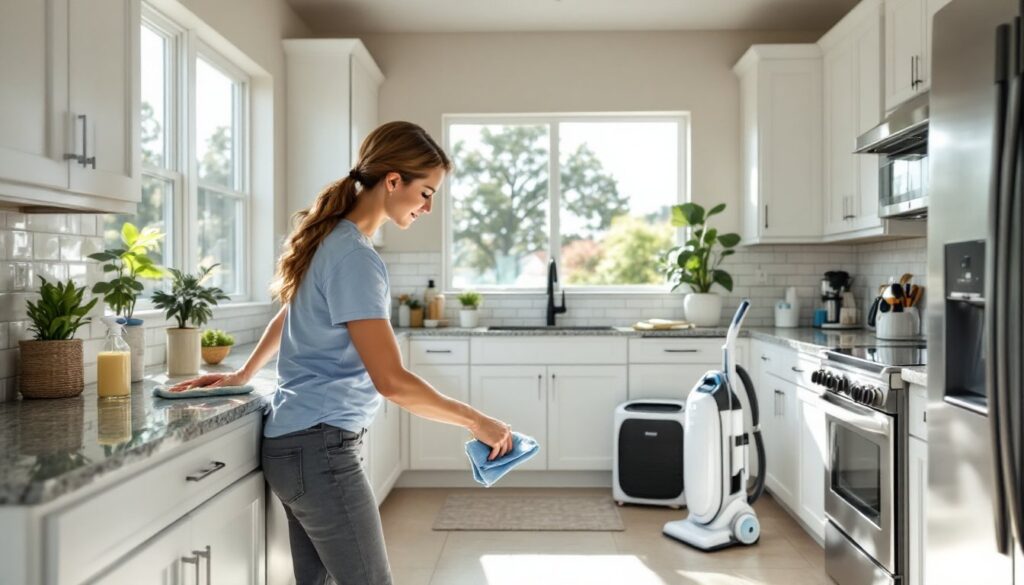
Focus your energy on spaces people see and use daily. The kitchen sink, countertops, and stovetop should be clean before anything else, this alone makes a home feel put-together. Bathrooms are second priority, especially the toilet, sink, and mirror. These two rooms make up about 40% of visible cleanliness but only take 20% of your time if done efficiently.
Living room surfaces, entryway, and dining table come next. Bedrooms and closed-off spaces can wait: they’re not in the sight line. If you’re short on time, a clean kitchen and bathroom will make the house feel three times cleaner than if you’ve tidied every room but left those spaces messy. This triage approach means you’ll never be caught off-guard by unexpected guests.
Gather The Right Tools And Supplies
The wrong tools slow you down and waste product. You don’t need dozens of specialty cleaners, most jobs are handled by a handful of staples.
Essential Supplies:
• All-purpose cleaner (or diluted white vinegar and water)
• Glass cleaner
• Disinfectant (bleach dilution or commercial spray)
• Toilet bowl cleaner
• Microfiber cloths (reusable and more effective than paper towels)
• Vacuum or broom
• Mop with hot water capability
• Scrub brushes and sponges
• Rubber gloves
• Garbage bags
Tools That Speed Things Up:
• A cordless handheld vacuum for quick spot-cleaning
• Squeegee for shower walls (prevents mold)
• Microfiber dusting cloths (catch dust better than feather dusters)
• Toilet brush with long handle
• Steam mop (optional but saves time on floors)
Microfiber cloths are worth the investment. They’re reusable, cut your product use by half, and clean more effectively than cotton or paper. Buy a bulk pack and rotate them through the wash. One quality all-purpose cleaner and white vinegar handle 80% of household cleaning, skip the specialized products for individual surfaces unless you have specific stubborn issues. Store supplies in each bathroom and the kitchen so you’re not running to a central closet mid-task.
Skip the heavy-fragrance industrial cleaners unless you need them for specific problems. They leave residue, clog air filters, and often don’t clean better than simple soap and water. The Ultimate Cleaning Schedule for Your Day, Week, Month, and Year offers guidance on which products matter most for different surfaces.
Master The Top-To-Bottom Cleaning Method
Gravity is your friend. Always clean from top to bottom within each room, dust falls downward, and you don’t want to re-clean surfaces you’ve already finished.
The Sequence (Per Room):
- Clear clutter and put items in their places first. You can’t clean around piles.
- Dust ceiling fans, shelves, and high surfaces with a dry cloth.
- Spray walls or mirrors with cleaner: wipe.
- Clean larger furniture surfaces (dresser tops, nightstands).
- Scrub bathroom/kitchen surfaces (sink, counters, toilet, tub).
- Mop or vacuum floors last.
This order prevents you from walking dirty floors or knocking dust onto already-cleaned counters. It’s the difference between 15 minutes and 30 minutes in a bathroom.
Timing Per Room (Realistic):
• Bathroom (toilet, sink, tub, mirror, floor): 10–15 minutes
• Kitchen (counters, appliances, sink, floor): 15–20 minutes
• Living room/bedroom (surfaces, vacuum, light dusting): 10–12 minutes
The key to speed is not rushing, it’s not re-doing work. A bathroom that’s been dusted and wiped methodically once beats a rushed bathroom you have to hit twice. Many homeowners refer to resources like The Spruce for detailed technique guides on specific surfaces when they encounter tricky situations like hard water stains or appliance grime.
Develop A Sustainable Weekly Cleaning Routine
The fastest way to clean isn’t one heroic eight-hour marathon, it’s consistent small efforts that prevent buildup. Dirt and grime accumulate in layers. A five-minute daily wipe-down beats a one-hour scrub-fest on the weekend.
Daily (5–10 minutes):
• Wipe kitchen sink and countertops
• Clear clutter in main living areas
• Do dishes or load dishwasher
• Wipe bathroom sink and mirror
Weekly (45 minutes to 1 hour):
• Vacuum all floors
• Mop kitchen and bathroom floors
• Clean toilets and tub
• Dust surfaces and furniture
• Change bed sheets
Bi-Weekly or Monthly:
• Clean inside appliances (microwave, oven)
• Wipe baseboards
• Clean windows
• Sanitize light switches and door handles
This schedule prevents the situation where you avoid cleaning because “it’s too much,” and then the job becomes genuinely daunting. Staying on top of spills and dust as they happen takes almost no time. Letting them sit for weeks requires heavy scrubbing and multiple passes.
Consistent routines also build habits. After two weeks of the same daily five-minute routine, it becomes automatic and requires almost no mental effort. You’re not “motivated” to clean: you’re just doing what you do at that time, like brushing your teeth.
Delegate Tasks And Involve Your Household
If you live with others, cleaning shouldn’t fall entirely on one person. Assign specific tasks or rotate responsibilities weekly. A teenager can vacuum their room and common areas. A partner can handle bathrooms or kitchen while you take the living spaces. Even young kids can put toys away, wipe tables with supervision, or help fold laundry.
Make it easy for people to succeed: store cleaning supplies where they’ll use them (bathroom cleaner in the bathroom, not in a garage cabinet). Set expectations clearly, “clean the kitchen counter” is vague: “wipe down the counters and sink, and load the dishwasher” is specific. Martha Stewart’s home organization guides often emphasize the value of systems that let everyone in the household contribute without confusion.
Conclusion
Fast and efficient house cleaning comes down to strategy, the right tools, and consistency, not elbow grease or magic products. A room-by-room approach with daily maintenance prevents overwhelming buildup and keeps your home genuinely clean. Start with high-traffic areas, use simple tools and supplies, and commit to a sustainable weekly routine. Most households can maintain a clean home in 45 minutes to an hour per week if they follow this method. The payoff is a home that feels fresh and organized without consuming your life.